See who AI recommends in your category
When someone asks AI for the best in your space, who gets named? Diploria tracks your share of voice against the competitors you choose, on the exact same questions, across 12 AI engines.
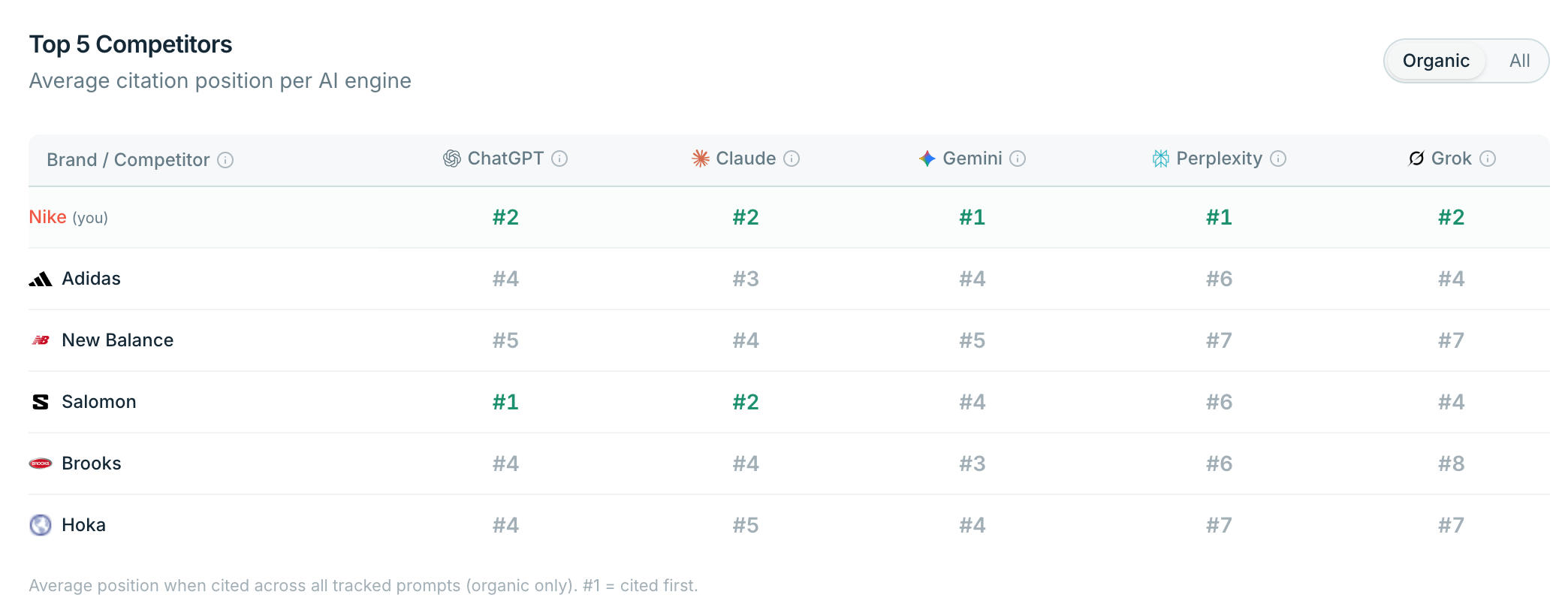
AI gives one answer. Make sure you are in it
Search used to return ten links, and you could rank somewhere on the page. AI returns a short list of names, and everyone else is invisible. If a competitor is named where you are not, you are not losing a ranking, you are losing the recommendation. The first step to fixing that is knowing exactly where you stand.
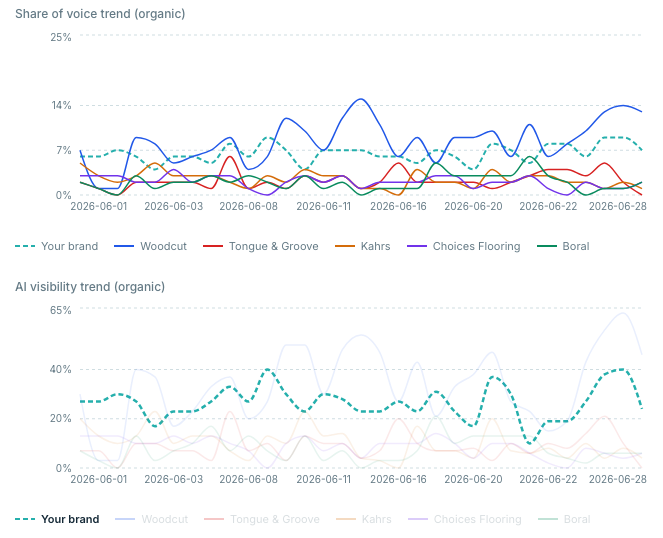
Measure your share of voice
Diploria asks the same buyer questions across every engine and measures how often you are mentioned versus your competitors. Your share of voice is calculated per engine, on identical prompts, so the comparison is fair and repeatable.
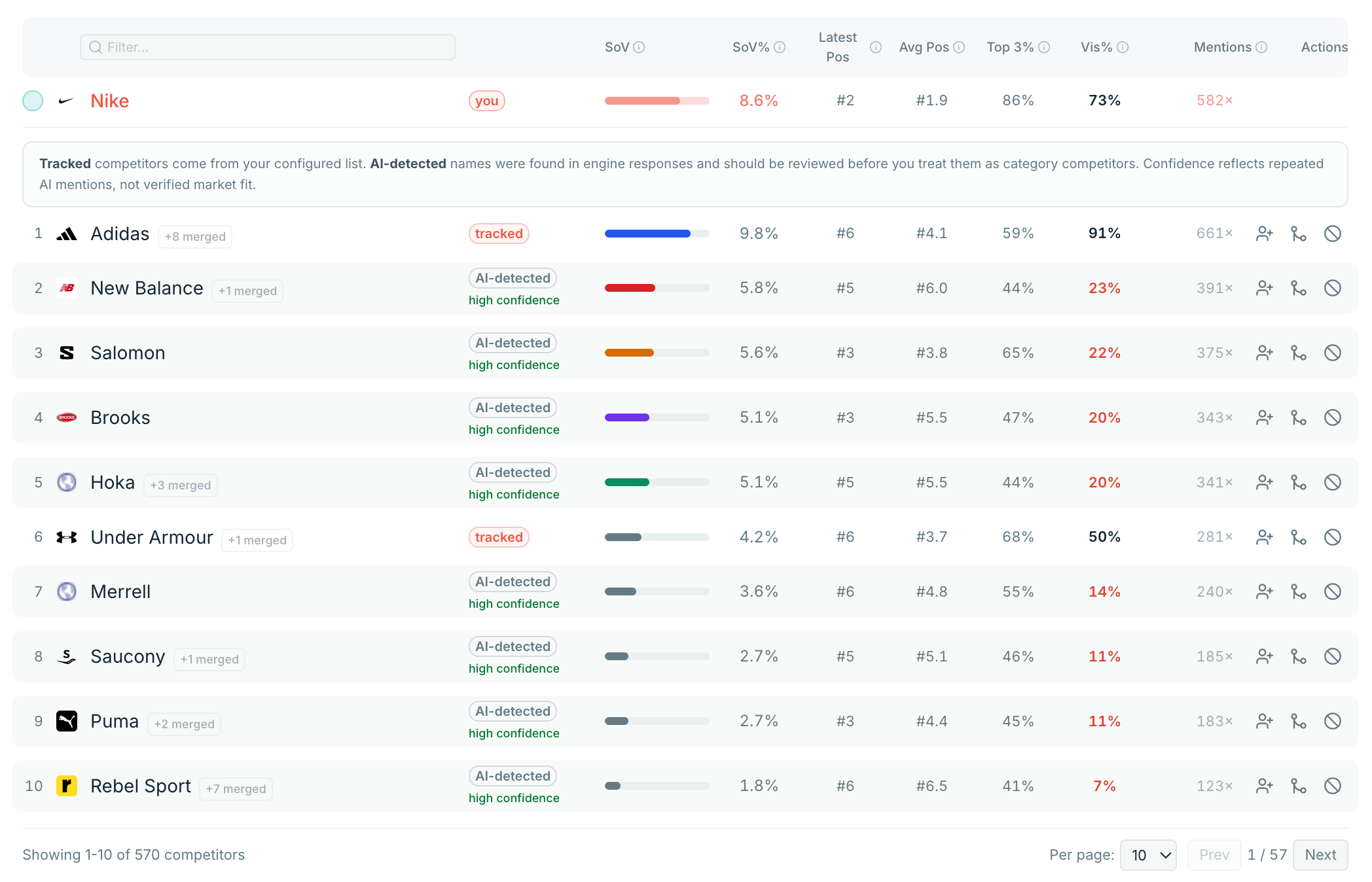
Benchmark every competitor side by side
See your tracked competitors lined up on the metrics that decide the recommendation: mention rate, average rank within the answer, and sentiment. The differences make the priorities obvious, which competitor to worry about, on which engine, and where you are already ahead.
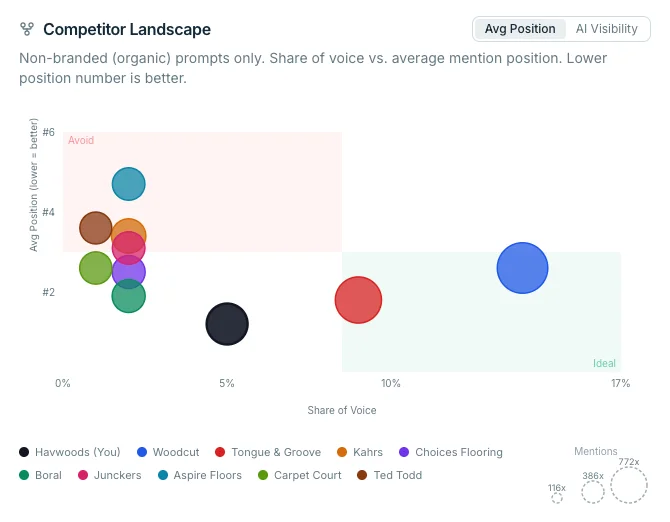
Map the whole field at a glance
Diploria plots every brand on a single chart by visibility against average rank, so you can see the leaders, the challengers, and where you sit in seconds. It is the slide your strategists and your clients understand immediately.
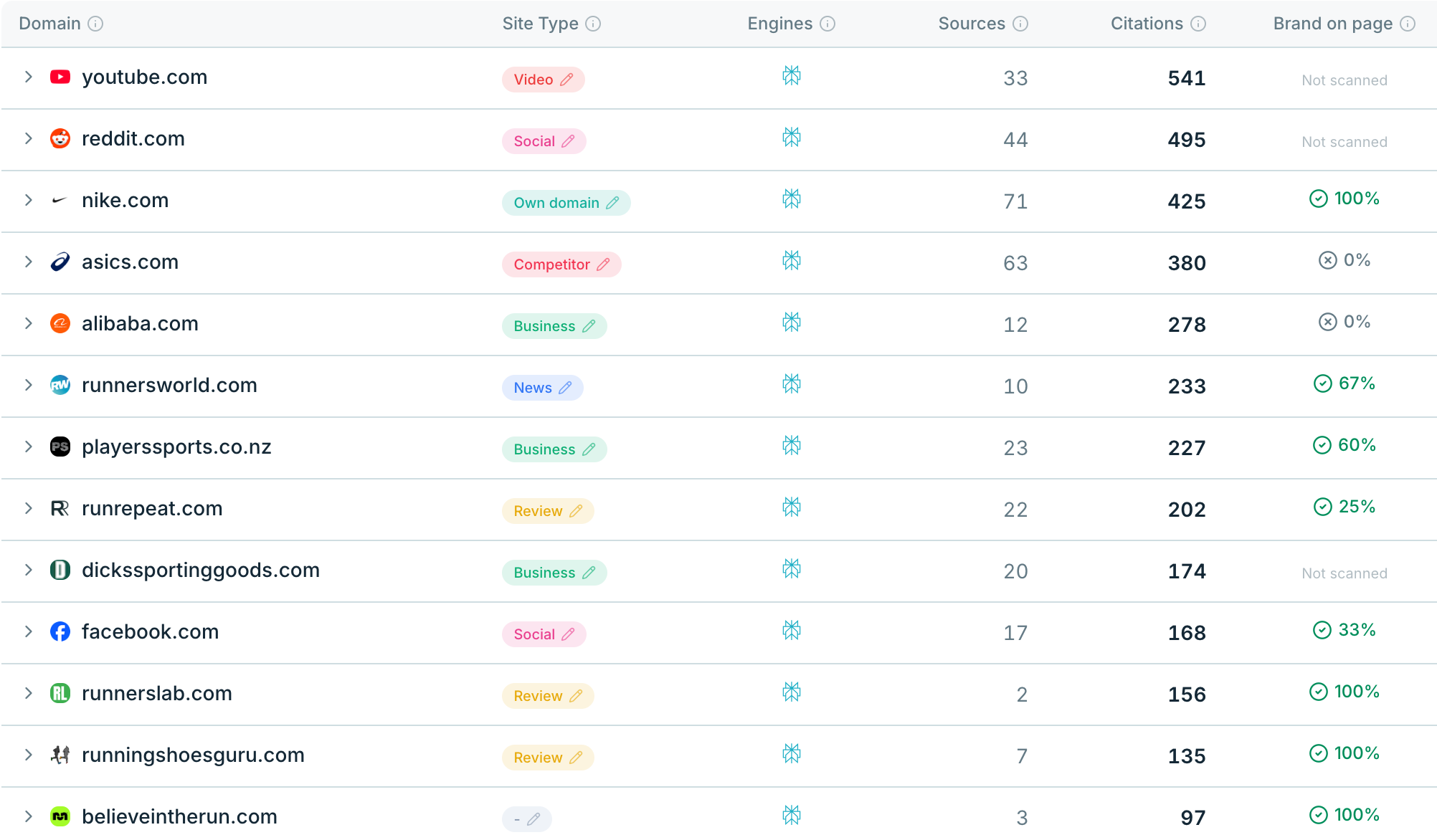
See the sources your competitors win on
For every answer, Diploria captures the URLs the engine cited. So when a competitor is named and you are not, you can see exactly which pages and domains the AI leaned on. That turns a vague problem into a target list: the specific sources you need presence in to compete.
See the prompts you are losing
Prompt Gaps shows every question where a competitor appears and you do not. Prompt-level wins and losses show, question by question, who the engine picks. Cited-domain overlap shows the sources feeding your competitors' mentions that never mention you, which is your PR and placement target list.
Compare by engine and by market
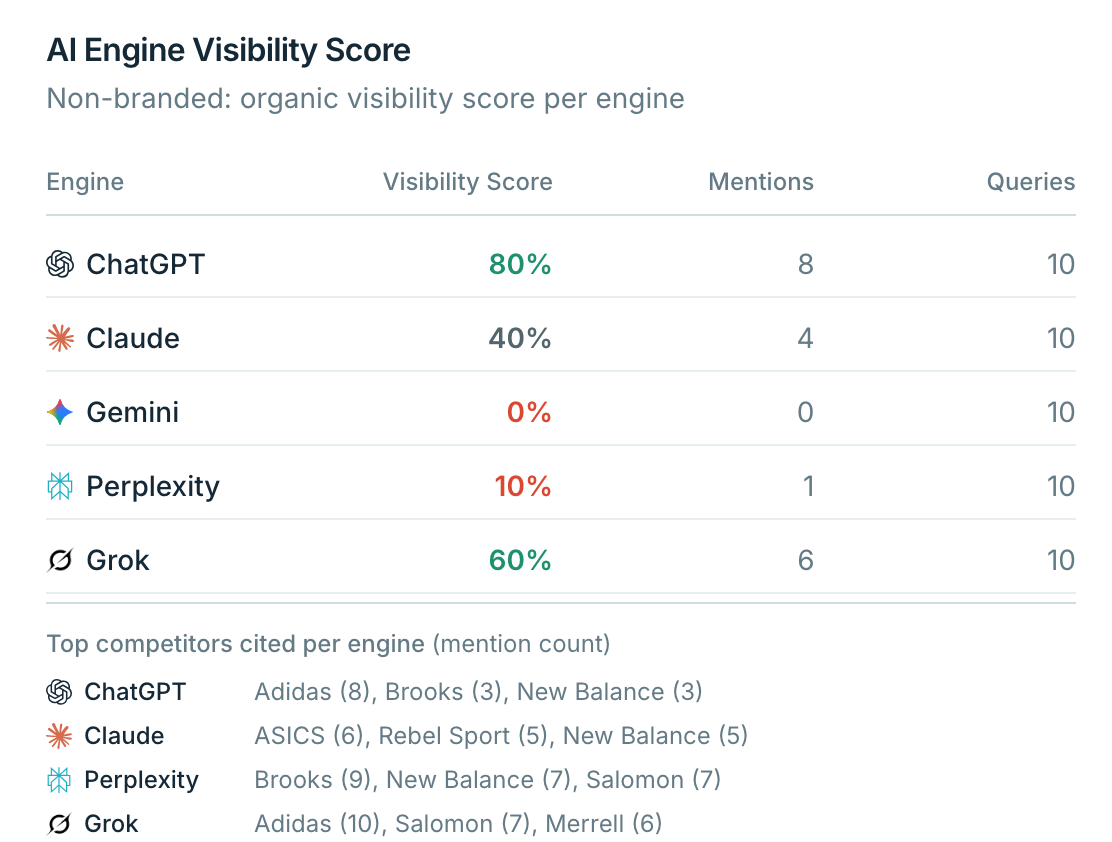
Visibility is not uniform. You might dominate Perplexity and be invisible in ChatGPT, or lead in one city and trail in another. Diploria breaks results down by engine and by market, so you can see precisely where the gaps are instead of guessing from an average. Want to explore Diploria's full 12 AI engines?
Built for strategists, founders, and agencies
Marketing and product marketing teams use Diploria to track the competitive set in AI and decide where to push. Founders use it to see how they stack up. Agencies use the share of voice charts and competitor maps as pitch material that wins new business. Ready to find and fix the gaps? Or see how AI describes you in the first place.
Frequently asked questions
Curious how we stack up? See how Diploria compares.
Start free.
Track your first brand in minutes.
No credit card needed.