Get your brand into AI answers
Answer Engine Optimization (AEO), also called Generative Engine Optimization (GEO), is the work of being found and cited when people ask AI instead of searching. Diploria gives you the tracking and the readiness checks to do it, in one place.
What is Answer Engine Optimization?
Answer Engine Optimization is the practice of structuring your brand and your content so AI assistants can find, trust, and cite you in their answers. It is the AI-era counterpart to SEO. Where SEO worked to rank your page in a list of links, AEO works to get your brand named in the single answer an assistant gives. Generative Engine Optimization is the same discipline under a different name.
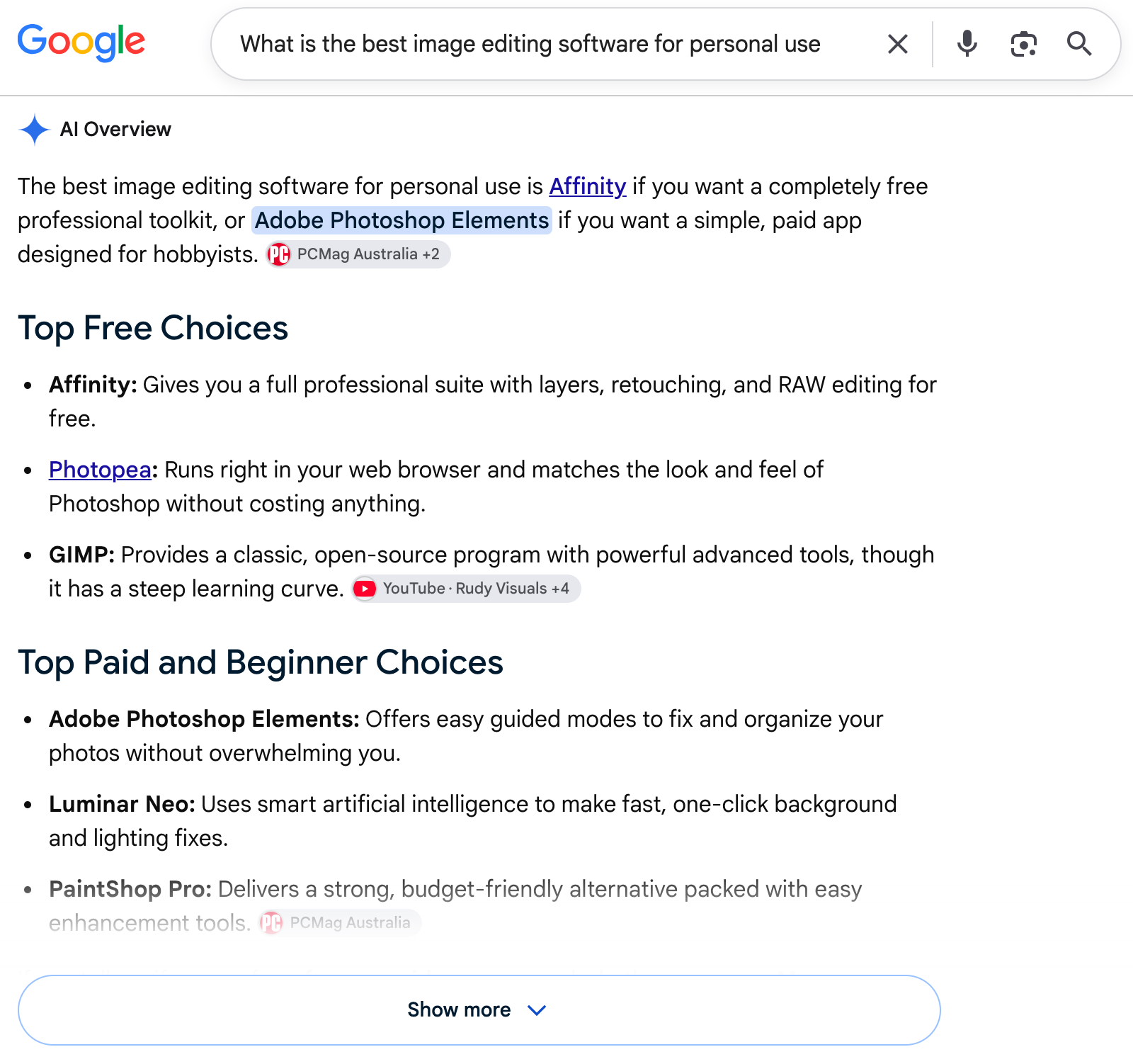
This matters now because the answer is replacing the list. Google's AI Overviews already appear on a large share of searches, and a growing number of people ask ChatGPT, Gemini, and Perplexity directly. If AI does not cite you, your competitors are getting recommended in your place.
Start by measuring where you stand
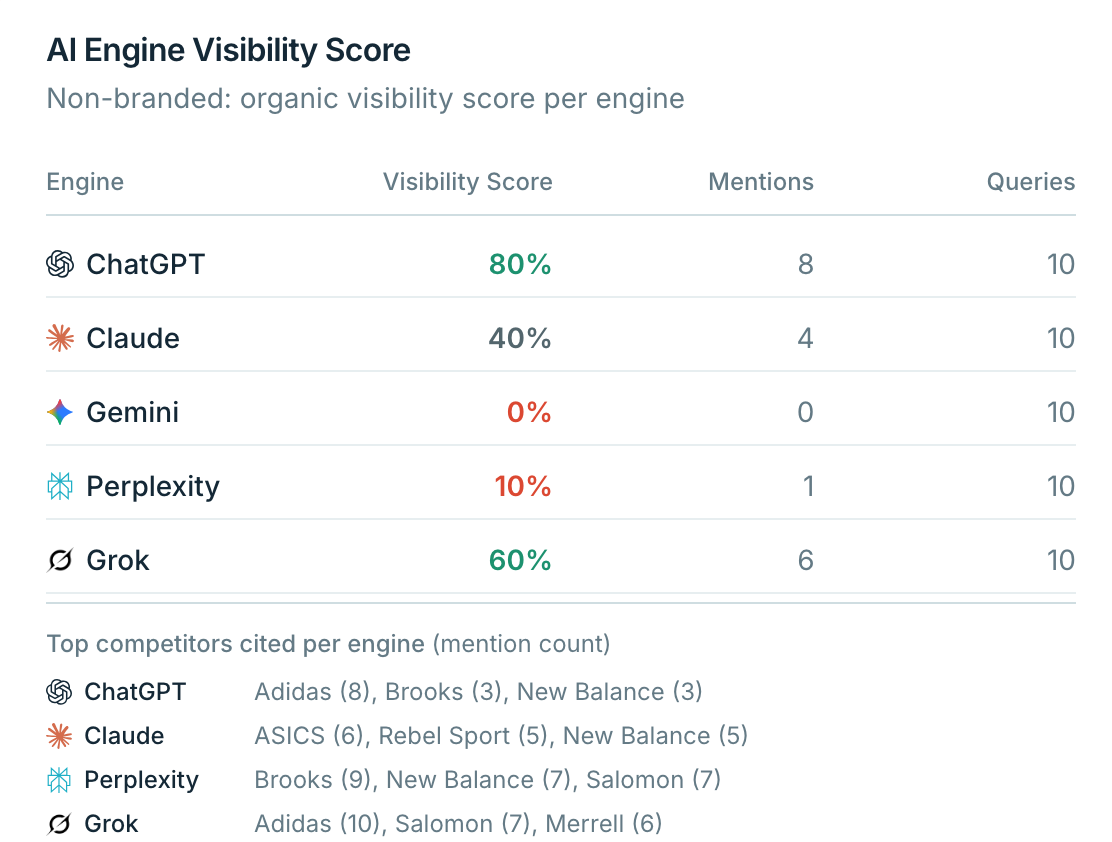
You cannot optimize what you do not measure. Diploria tracks your visibility across 12 AI engines and gives you a single Visibility Score from 0 to 100, built from how often you are mentioned and how favorably, trended over time and broken down by engine.
Score any page for AI readiness
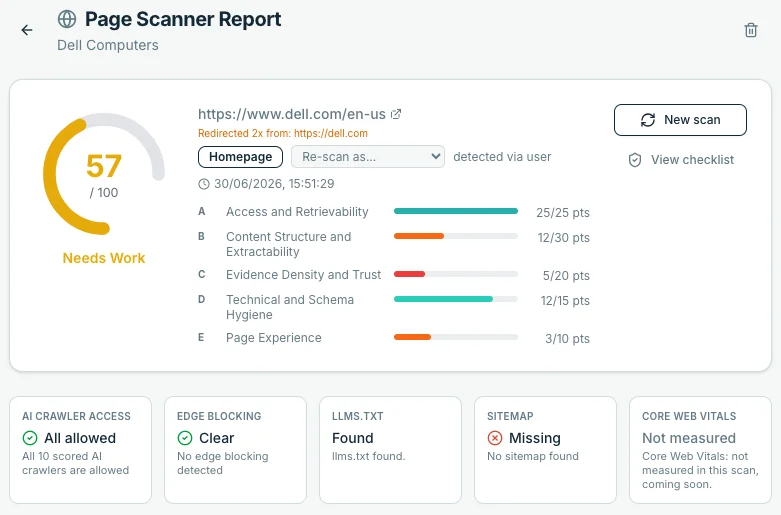
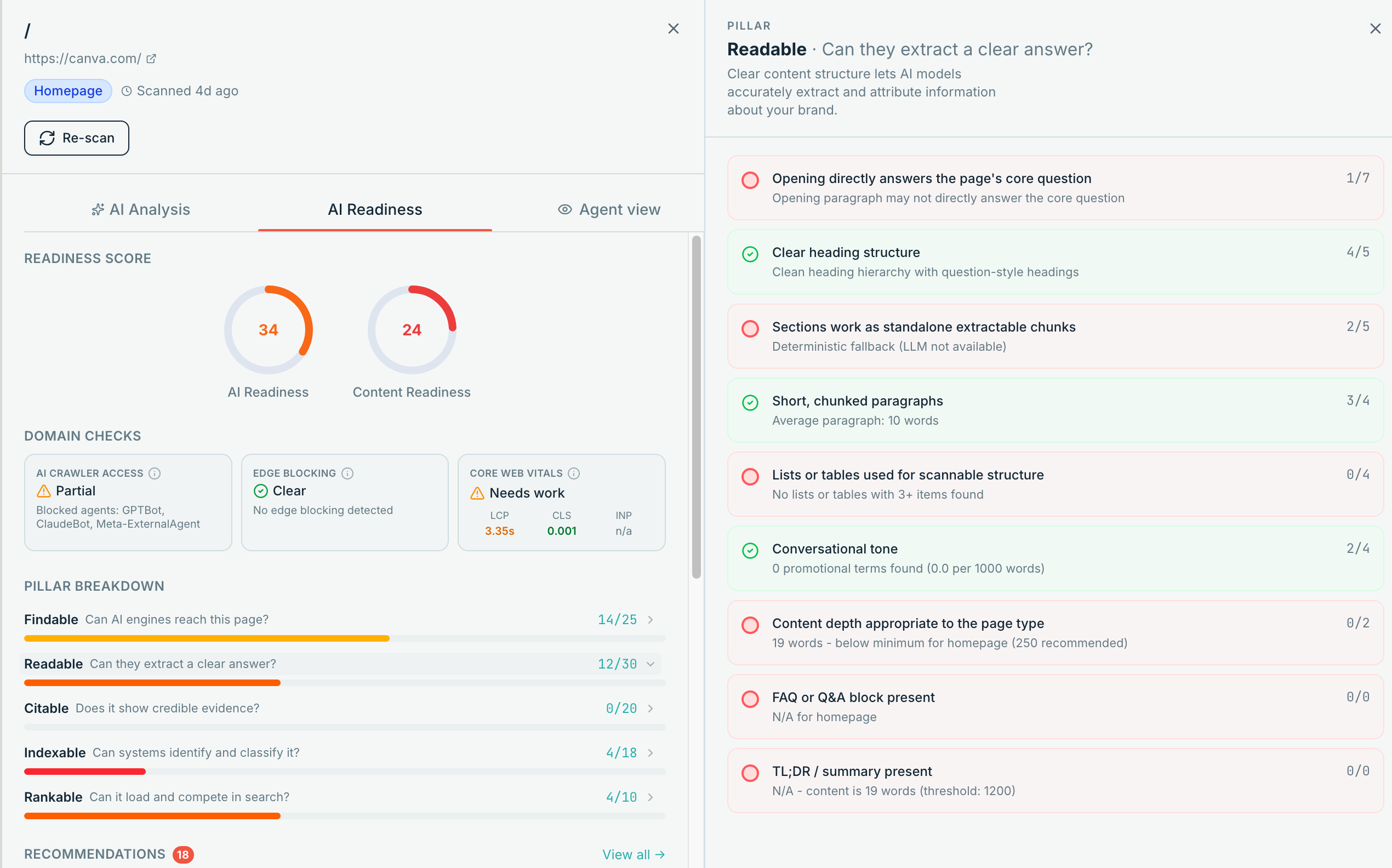
The AI Readiness Scan grades any URL from 0 to 100 across five pillars: Findable, Indexable, Readable, Rankable and Citable. It turns "is this page ready for AI?" into a clear score with the reasons behind it.
Know exactly what to fix
The AI Readiness Checklist turns the scan into a prioritized to-do list, with the technical items auto-checked where Diploria can detect them: llms.txt, schema markup, robots.txt access for AI crawlers, and more. We are honest about what each item is worth. Some, like crawler access, are genuine levers. Others are hygiene. The checklist tells you the difference so you spend effort where it counts.
See whether your own content gets cited
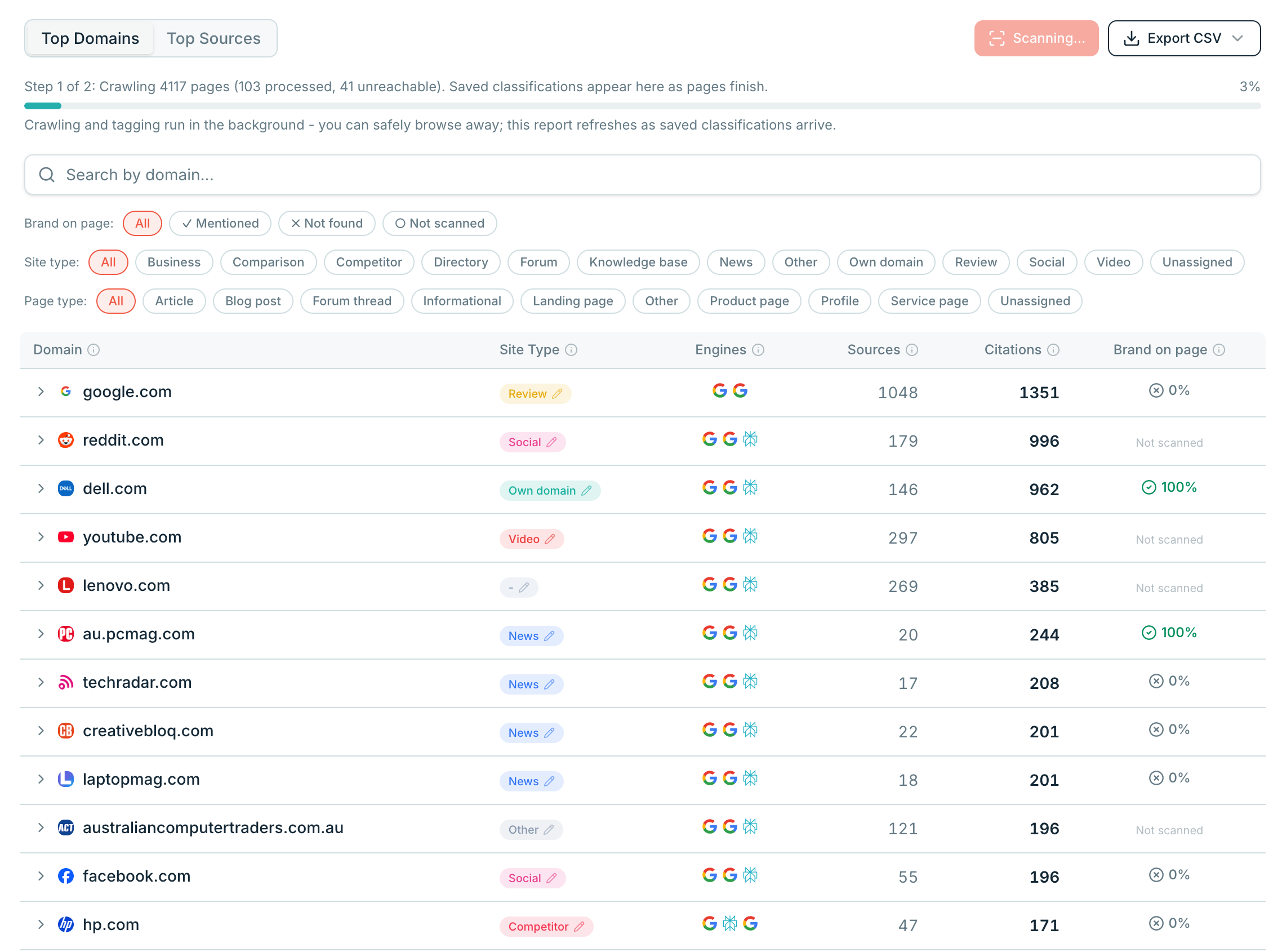
Diploria captures the sources behind every answer, including whether your own domain was cited, so you can tell if your content is actually being used by AI or ignored. Connect Google Analytics 4 and you can also measure the real referral traffic arriving from AI assistants, closing the loop from visibility to visits.
A much bigger Optimize release is coming
Tracking and readiness are live today. We are building a far deeper Optimize layer that turns your visibility data into specific, prioritized actions. If you want early access as it rolls out, tell us and we will keep you posted.
Get early accessBuilt for SEO and content teams
SEO leads use Diploria to extend their search strategy into AI. Content marketers use the readiness scan to make pages citable. Agency SEO teams use the whole stack to add AI visibility as a service their clients can see. Track how AI describes your brand or see who AI recommends instead of you.
Frequently asked questions
Start free.
Track your first brand in minutes.
No credit card needed.