Measurement finds the problem. This closes it
Most AI visibility tools stop at a score. Diploria's Optimization Hub scans your pages, ranks the fixes by impact, generates the files AI engines actually read, and then shows you whether your visibility moved. Five stages: Measure, Position, Cover, Earn, Prove.
Know exactly where you stand
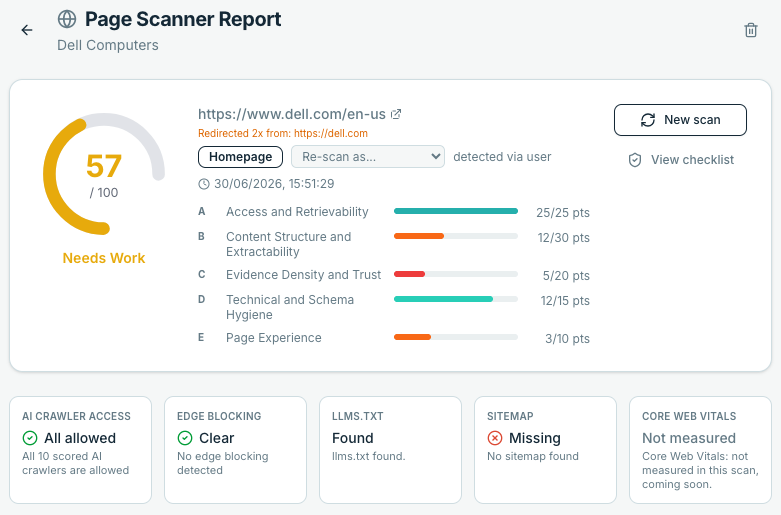
The Readiness Overview gives your whole site a single AI readiness score out of 100, and the Page Scanner does the same for any individual URL. Each scan grades five weighted pillars: Findable, Indexable, Readable, Rankable and Citable.
Paste a URL, get the score, and see the specific reasons behind every point lost. Re-scan after you ship a fix and watch the score climb. No guessing about whether a page is ready for AI to read and cite.
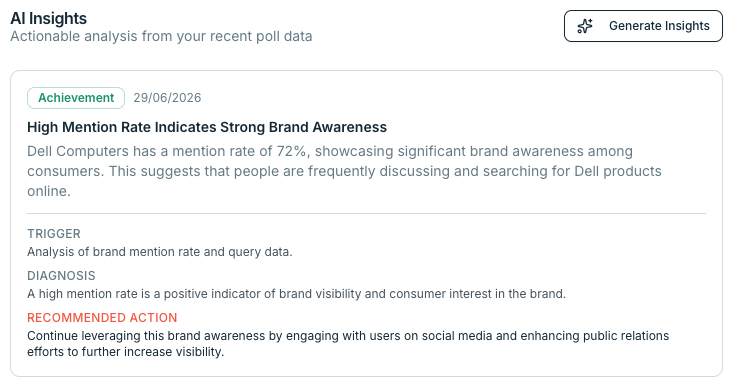
A fix queue ranked by estimated impact
Every scan feeds the Recommendations Board: a prioritized queue of schema, content, and authority improvements, each with an estimated impact so your team works top-down instead of guessing.
We are honest about weight. Some items, like crawler access, are genuine levers. Others are hygiene. The board tells you the difference, so effort goes where it actually moves visibility.
Put effort where the opportunity is
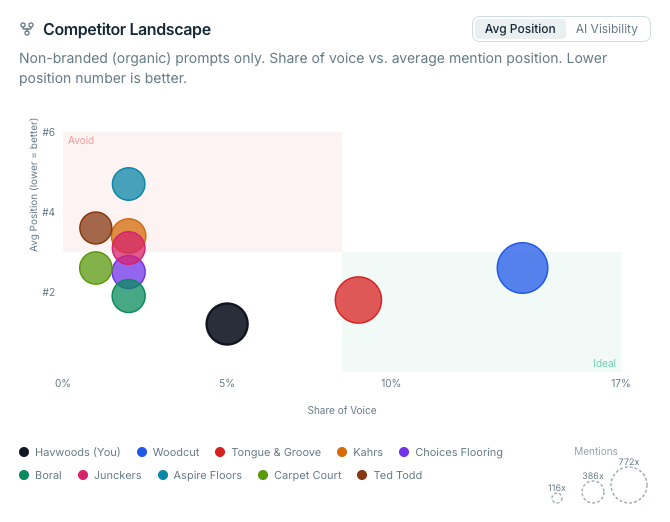
The Focus Map is an AI-generated quadrant plotting your pages and topics by readiness against opportunity. Pages that are nearly ready and sit on high-opportunity topics rise to the top; polished pages on topics nobody asks about drop away.
It answers the question every content plan starts with: of everything we could improve, what will actually change how often AI mentions us? Available on paid plans.
Generate the files AI actually reads
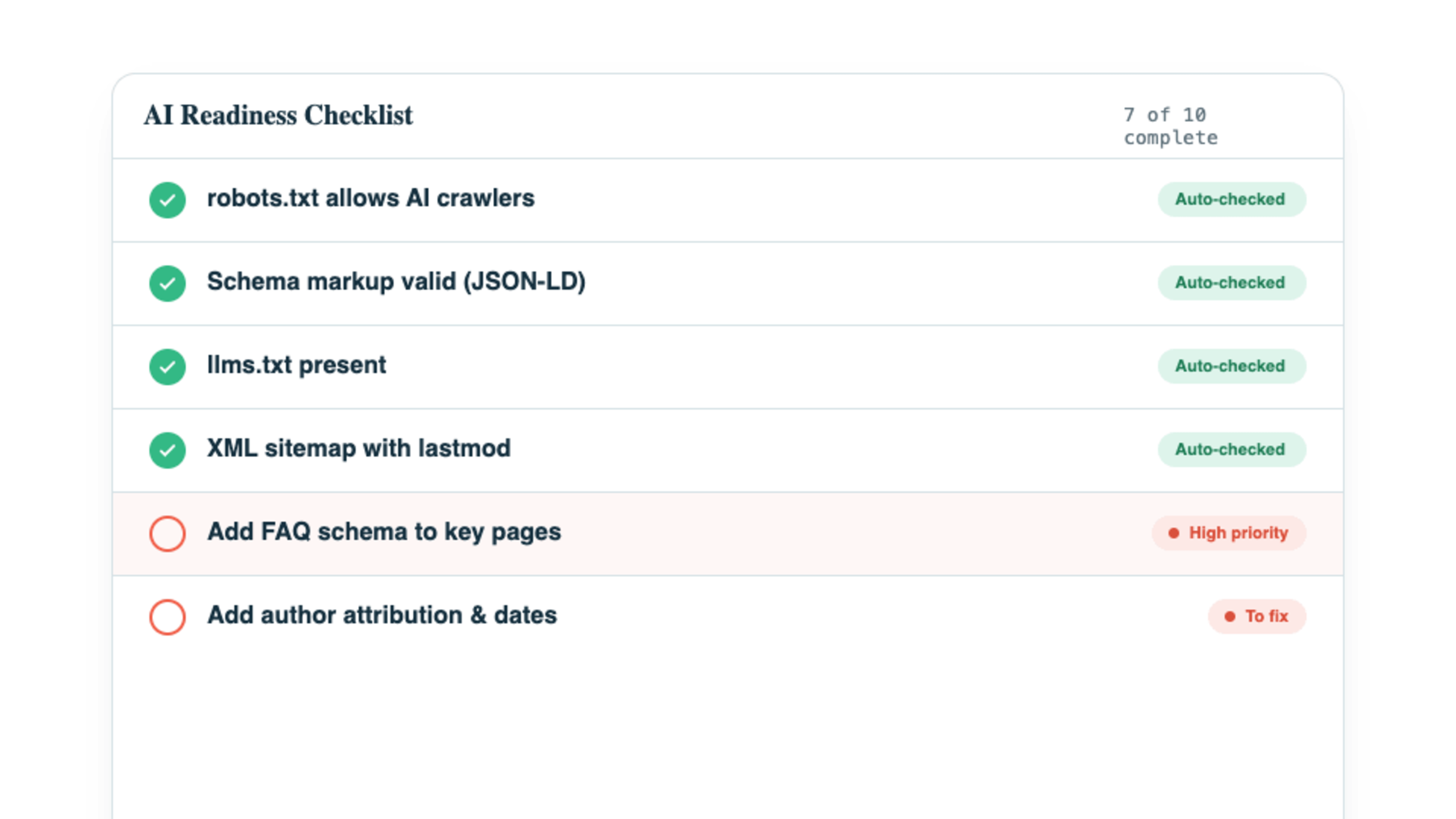
Choose your AI access policy and Diploria inspects your live robots.txt, shows a diff of which AI agents are currently blocked versus what your policy wants, and generates the exact snippet to append. It also detects CDN and edge-level blocking that robots.txt alone cannot see.
The llms.txt generator produces a structured, machine-readable brand file covering your name, description, topics, permissions and key pages, so crawlers get authoritative context instead of guessing.
Win the sources AI trusts
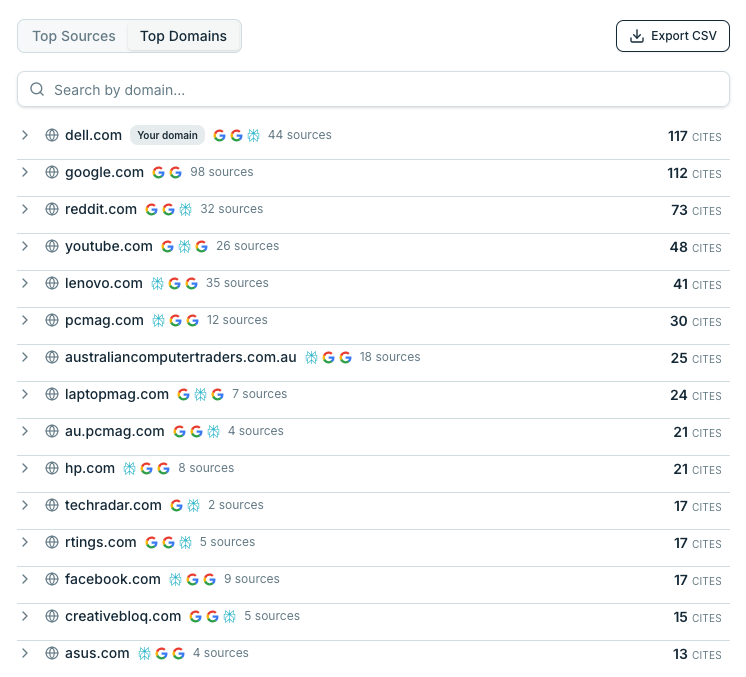
Your own pages are only half the story. Sources and Citations shows which third-party sites AI engines cite in your category, whether your domain made the list, and where your competitors are cited but you are not, so you know exactly which publications, review sites and forums to earn your way into.
Prompt Gaps completes the picture: the specific questions where a competitor appears and you do not. Together they are the clearest to-do list in the product, pointing at the content and the coverage you still need to earn.
Show exactly what moved
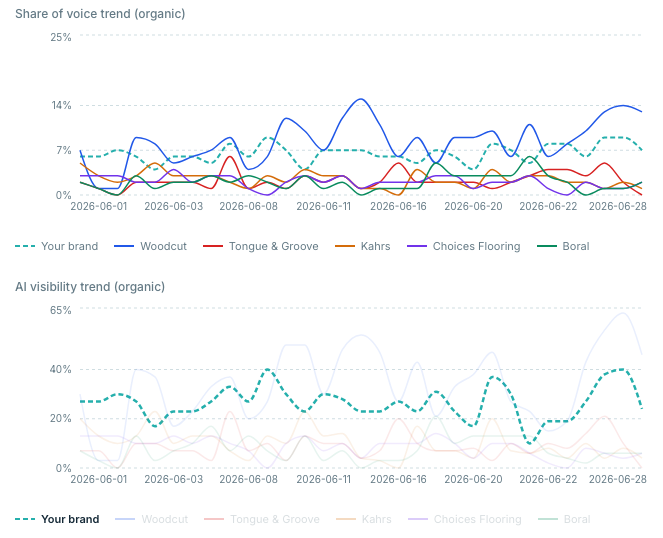
The Actions and Impact board records what was changed and when, then lays your visibility and readiness trends over it. Ship a fix, re-scan, and see whether the needle moved, per action, not as a vague monthly average.
For agencies, this is the renewal loop: a record of every improvement shipped and the visibility it earned, ready to drop into the next client report.
Competitors measure. Diploria measures and fixes
A visibility score tells you that you have a problem. The Optimization Hub is what closes it: scan, prioritize, fix, and prove it moved, all in one place, connected to the same tracking data.
Start optimizing freeFrequently asked questions
Stop reporting problems.
Start fixing them.
Free plan, no credit card. Or run a free visibility check first and see what needs fixing.